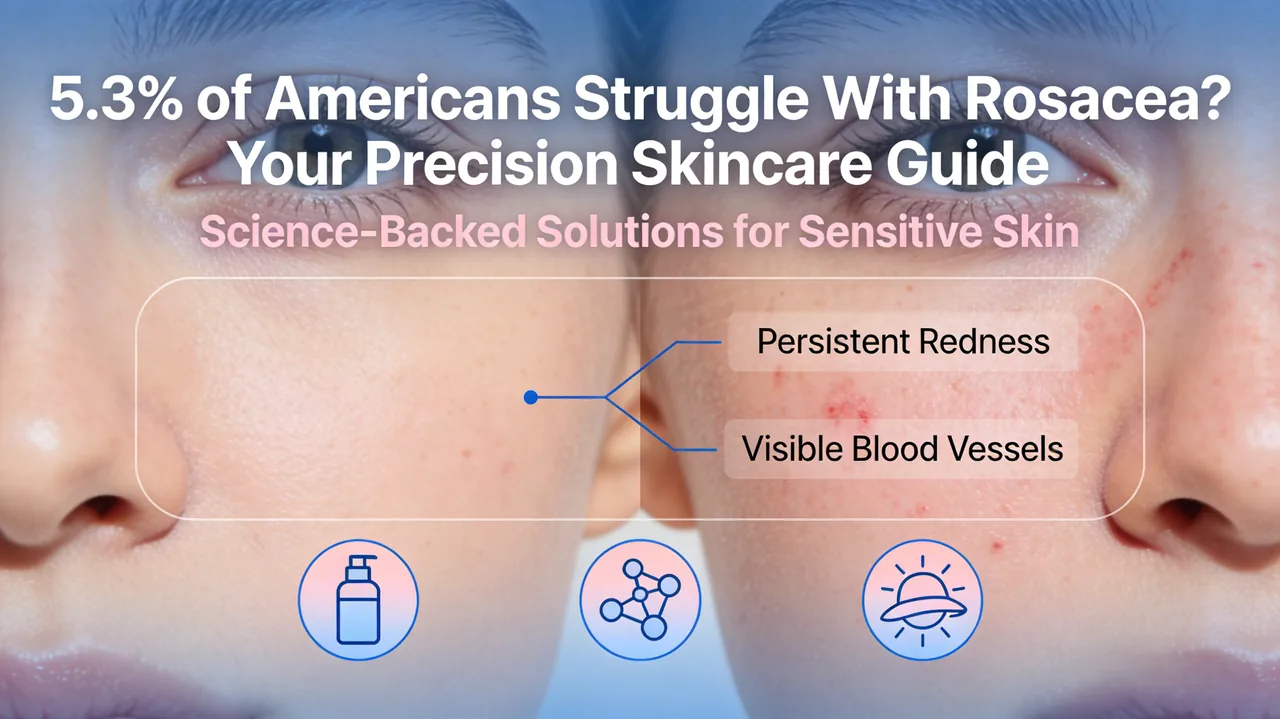
Gentle Cleansing: Guard the First Line of Your Skin Barrier
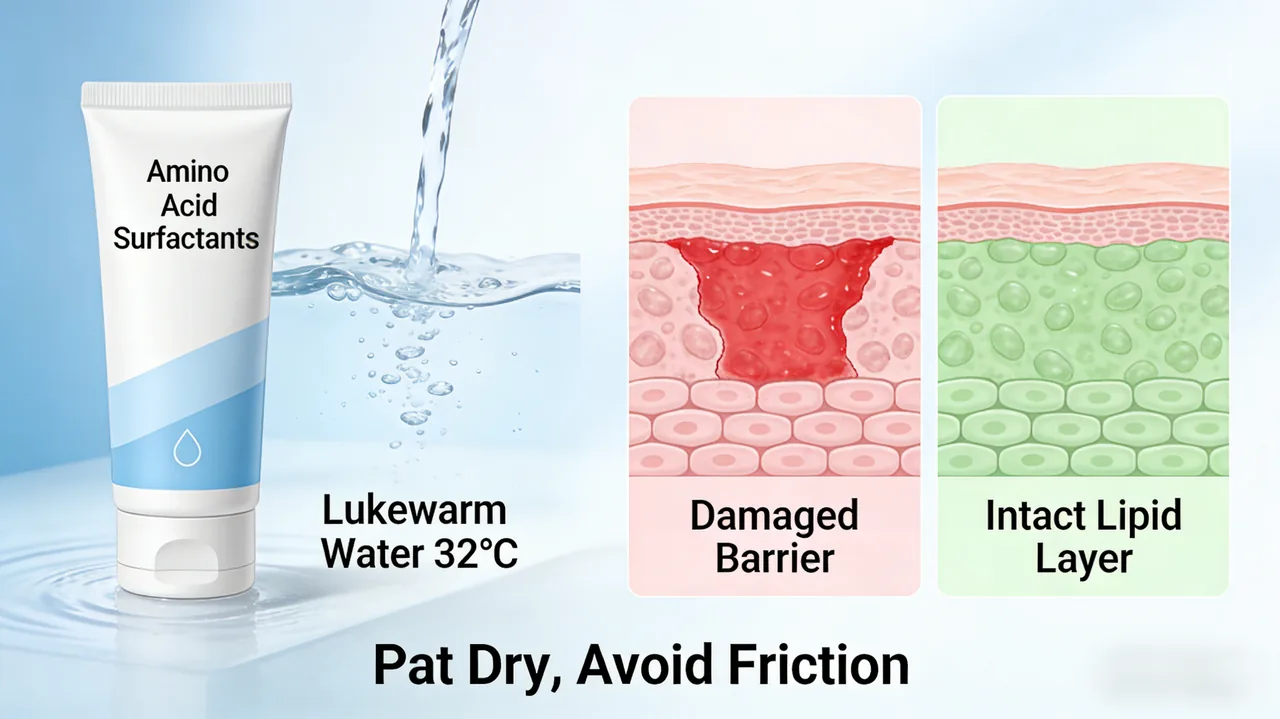
A damaged skin barrier is the shared root of both sensitive skin and rosacea—and harsh cleansing can trigger immediate flushing. Opt for mild cleansers with amino acid surfactants; steer clear of soap-based products, exfoliating beads, or facial cleansing brushes (their friction irritates delicate skin). Wash your face with lukewarm water (around 32°C, close to body temperature) no more than twice a day, and leave cleanser on for no longer than 20 seconds. During severe redness flare-ups, gently pat skin with saline solution instead of traditional cleansing—this avoids stripping the skin’s lipid barrier, which would worsen broken capillaries.
Ingredient Choices: Focus on Anti-Inflammation + Repair
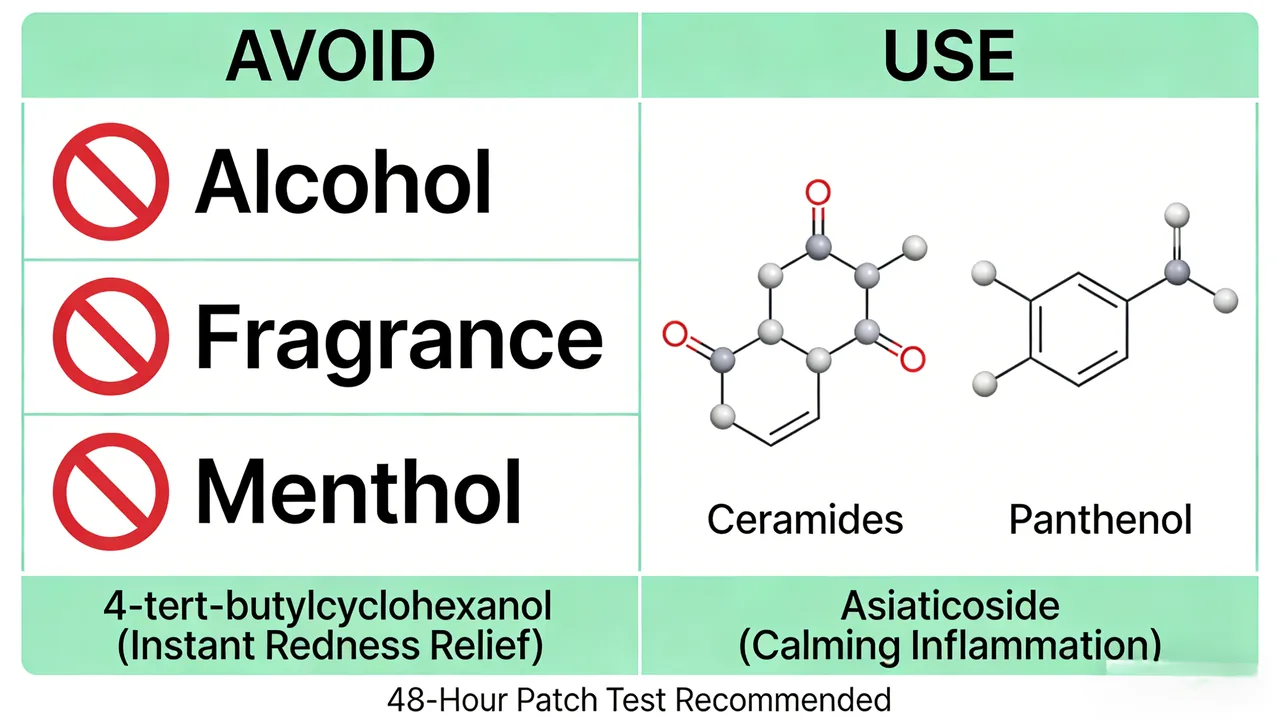
Keep your routine “simple and effective”: first, avoid irritants like alcohol, fragrances, menthol, and eucalyptus oil. For sensitive skin, prioritize barrier-repair ingredients—ceramides, squalane, and panthenol—to rebuild the skin’s protective lipid layer. If you have rosacea, add anti-inflammatory ingredients: 4-tert-butylcyclohexanol (for instant redness relief) and asiaticoside (to calm underlying inflammation). For the papulopustular type (with pimples/pustules), use prescription-strength azelaic acid gel only under a dermatologist’s guidance. Always test new products with a 48-hour patch test (apply behind the ear or along the jawline) to check for irritation before using them on your face.
Avoid Triggers + Rigorous Sun Protection: Stop Relapses Before They Start
UV rays are the #1 trigger for rosacea—so combine “physical barriers + gentle sun protection.” Reach for wide-brimmed hats and sun-protective masks first; when outdoors, use a physical sunscreen (with zinc oxide or titanium dioxide) that’s SPF 30 or higher (chemical sunscreen filters can irritate rosacea-prone skin). Also avoid high-temperature environments (saunas, hot drinks), alcohol, spicy foods, and extreme emotional fluctuations. During remission periods, stick to low-intensity exercise—and after working out, use cold compresses to soothe skin and prevent flushing. Consistent, targeted care can significantly reduce rosacea flare-ups. If redness worsens, or you develop papules, pustules, or eye discomfort (a common rosacea symptom), see a dermatologist for a personalized treatment plan. By sticking to “gentle cleansing, precise repair, and strict trigger avoidance,” most people with rosacea or sensitive skin can achieve long-term skin stability.