
What Causes It?
Age-related issues: Cataracts cloud lenses, scattering light, while diabetic retinopathy damages retinal blood vessels. Over 24 million Americans 40+ have cataracts, making night driving risky Genetics: Retinitis pigmentosa (RP), a progressive disorder, hits 1 in 3,500–4,000 Americans. It kills rod cells first, starting with night blindness before narrowing vision to tunnel sight

How We Diagnose & Treat It
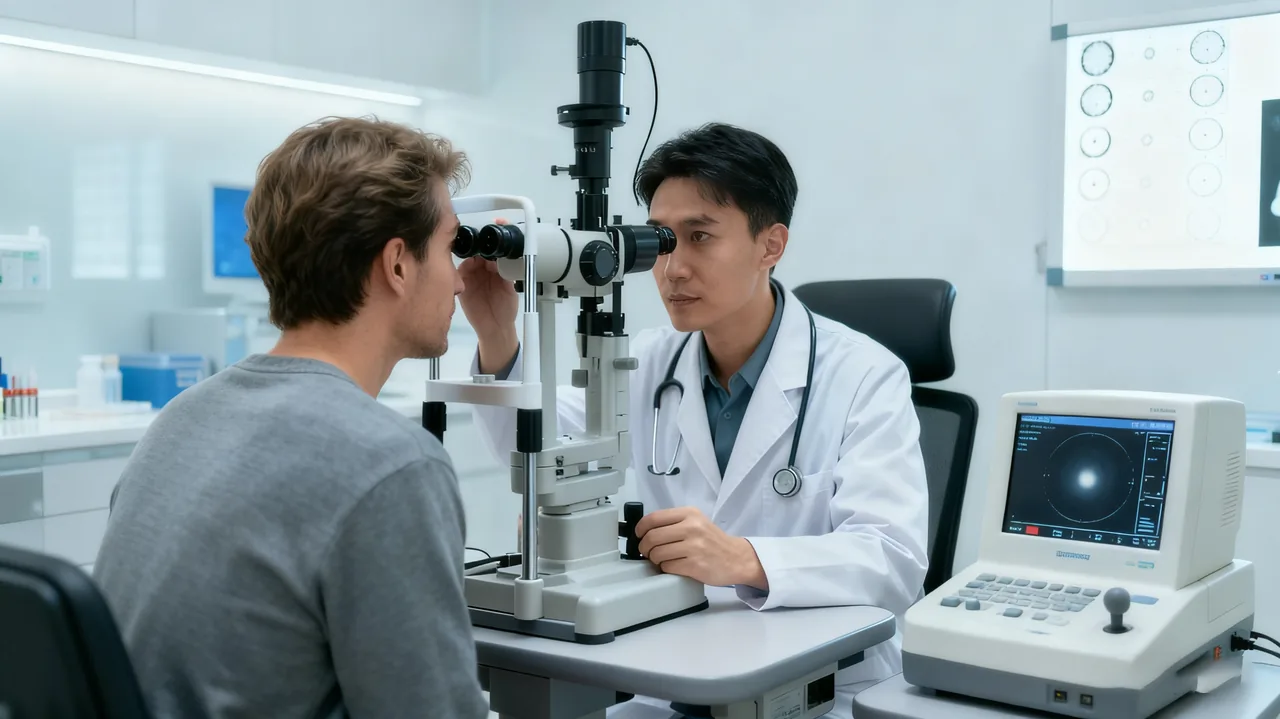
Eye exams uncover the root cause: dark adaptation tests measure how long eyes adjust to dimness, while ERG checks retinal cell function. Gene tests confirm RP .Treatments target the issue:Cataract surgery swaps cloudy lenses for implants, restoring night vision.
Why It Matters in America
Night blindness robs independence: Seniors avoid driving after dark, and RP patients face worsening vision in adulthood. But hope grows—new therapies could soon turn the tide If you struggle with dim light, don’t wait. Early exams catch issues before they progress, and today’s research means the dark may not stay a barrier forever